
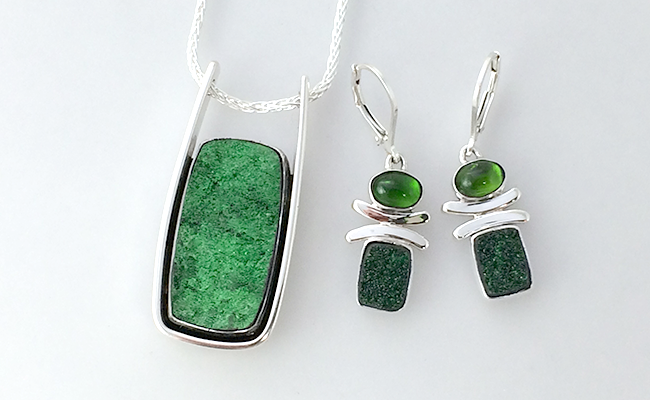
The deep shades of green in the stones shown above facilitate a profound journey into self. As I write this post I am listening to a recording of an astrology reading I had a few weeks ago. In the reading I keep hearing the message of now is the time to explore the hidden parts of self and to deeply connect with the beauty, strength and wisdom within.
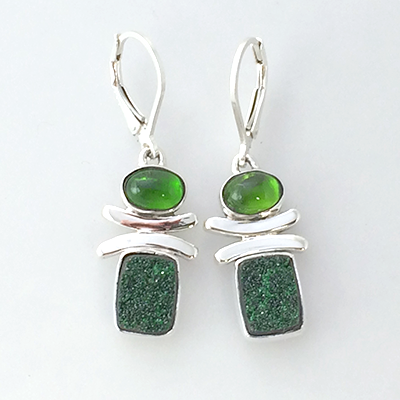 What are my hidden strengths? What gifts do I have to give the world? How have I been keeping myself small rather than living to my full potential? The textured green stone in the pendant and the bottom half of the earrings is tsavorite garnet drusy. This luscious green stone from Africa helps to stimulate the knowledge that I am the ruler of my own destiny and directs me to “know thyself”. The smooth upper stone in the earrings is chrome diopside from the remote regions of Eastern Siberia. This stone is said to help alleviate aggression and stubbornness, while enhancing the emotions of love and commitment.
Everything in my life has prepared me for this moment in time, right here, right now. Each breath takes me one step further, always moving, forever evolving. Am I willing to be fully conscious for this journey? I think I need to keep these earrings for myself.

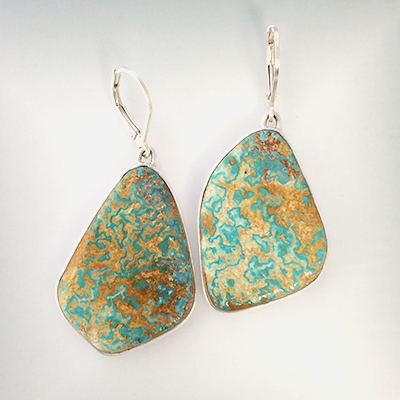 I generally refer to my turquoise either by the state it is from, in this case Nevada, or by the name of the mine. The term “boulder turquoise” refers to the fact that the turquoise is still in it’s boulder, or rock matrix, rather than just being a nugget of turquoise. Cut stones from “boulder turquoise” are also sometimes called “ribbon turquoise” when the turquoise vein is flanked by contrasting matrix stone creating what looks like a ribbon of turquoise through the stone.
 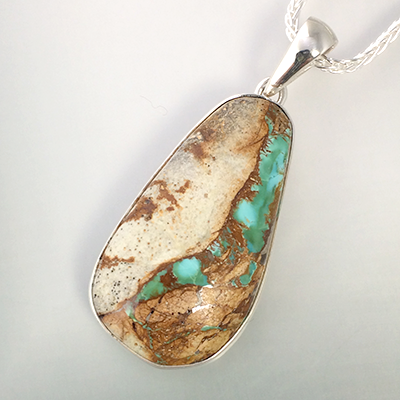 I love when I get the opportunity to purchase stones directly from the miners. I purchased all these stones from the Otteson family who regularly set up a booth at both the Denver and Tucson Gem shows each year. The Ottesons have been mining turquoise from the Royston region for over 60 years.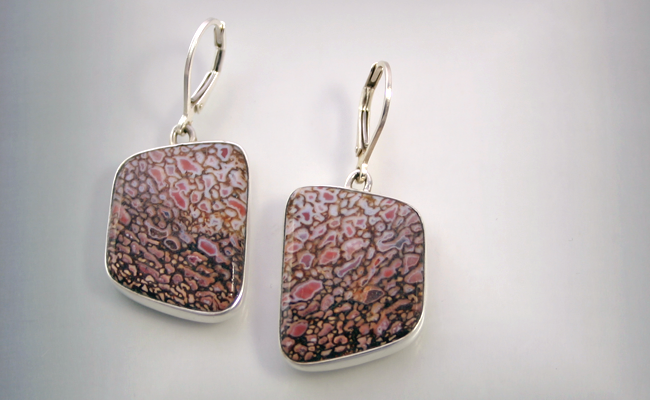

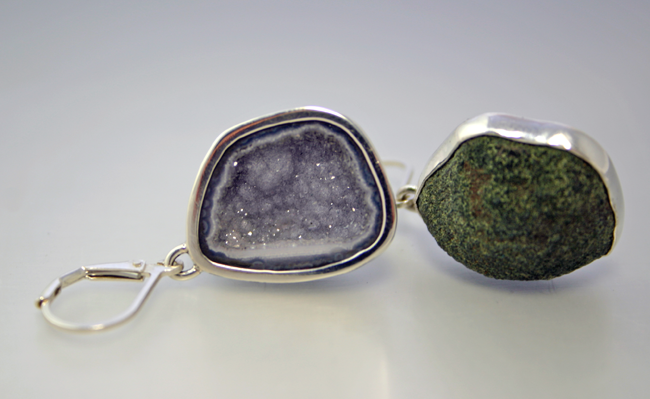
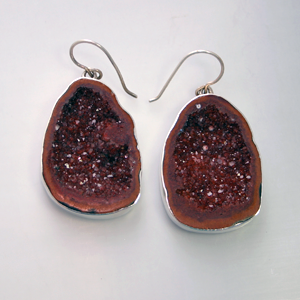 The walls of these crystal pockets are sometimes banded, revealing differences in the chemical composition of groundwater that leaked into the cavities of bedrock over time as the geodes formed. You never know what you will find until you cut it open.